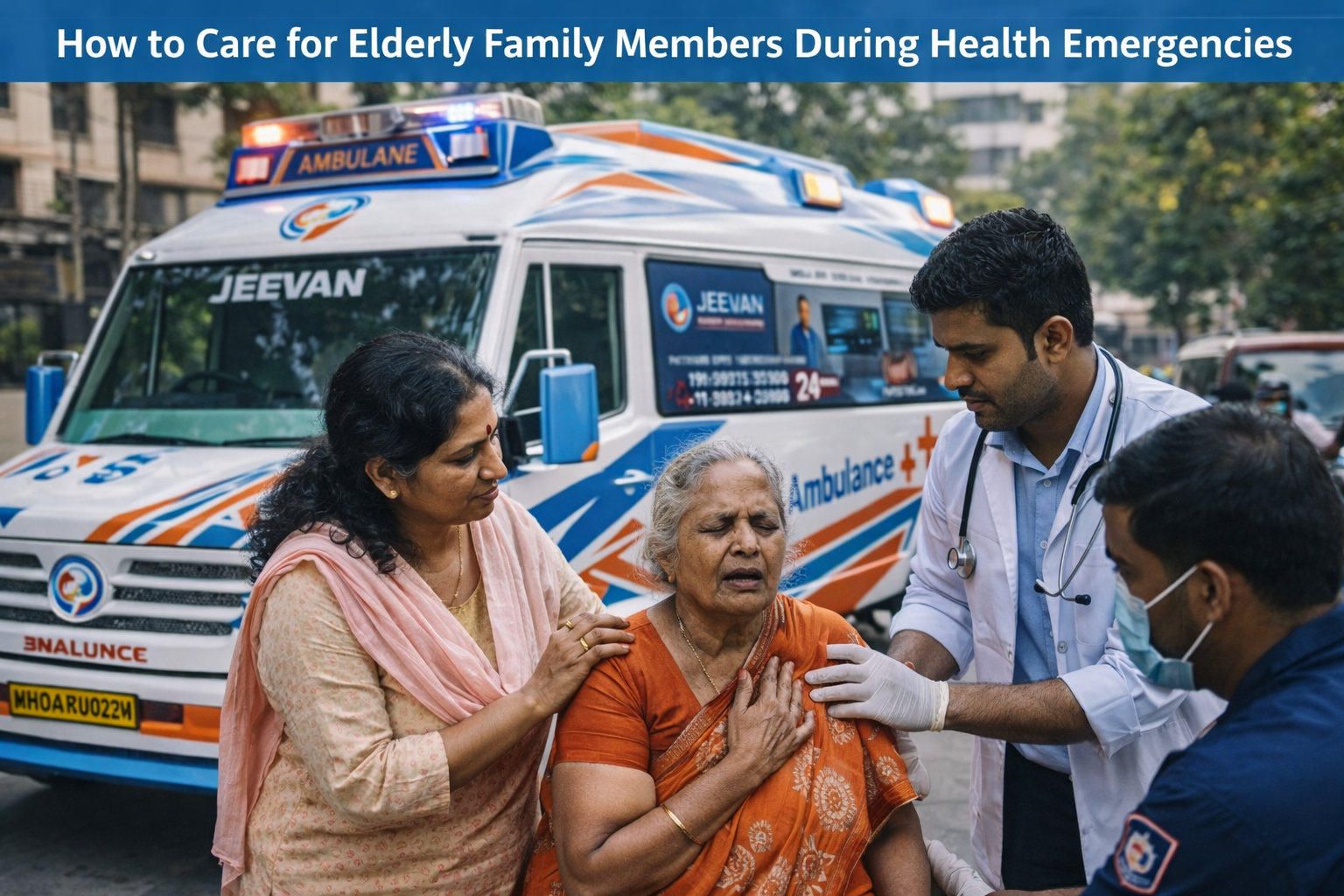
In today’s fast-paced corporate environment, employee safety and wellbeing have become central to responsible business operations. While most organizations invest in fire safety, security, and ergonomic workspaces, one crucial aspect often overlooked is medical readiness specifically, the availability of on-site ambulance and emergency medical support.
Medical emergencies can occur without warning, from sudden cardiac events and injuries to unforeseen health crises. The ability to respond swiftly and effectively can make the difference between life and loss, between a minor incident and a major disruption. For Indian offices where workforces are often large, diverse, and sometimes spread across expansive campuses having robust medical support is not just a best practice; it is a vital component of workplace safety, compliance, and employee wellbeing.
This blog explores why on-site ambulance and medical support are essential for modern offices, the regulatory landscape, and how organizations can build a culture of preparedness that protects their most valuable asset: their people.
The Reality of Medical Emergencies in Indian Workplaces
Understanding the Risks
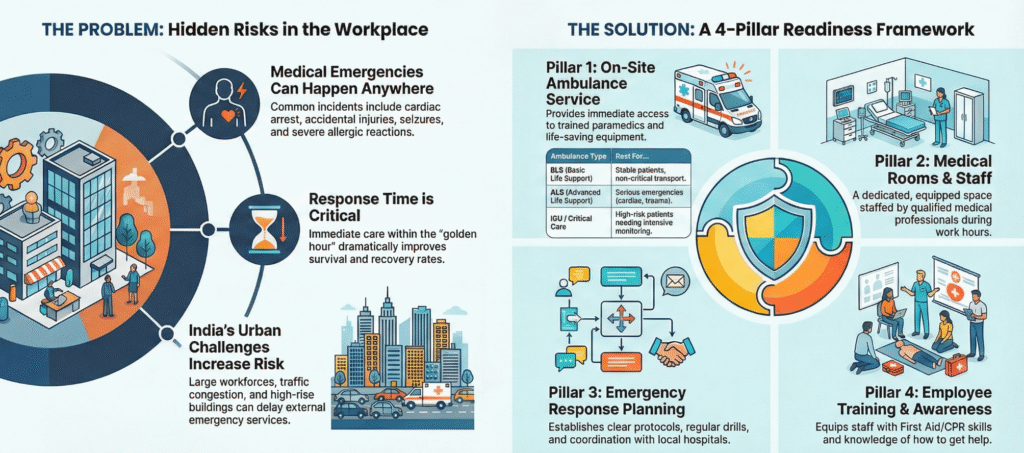
Offices are not immune to medical emergencies. Common scenarios include:
- Sudden cardiac arrest or heart attacks
- Fainting, seizures, or diabetic emergencies
- Accidental injuries (slips, falls, cuts)
- Allergic reactions or asthma attacks
- Heat exhaustion or dehydration, especially in large campuses
- Mental health crises
While many offices have basic first aid kits or tie-ups with nearby clinics, these measures may not be sufficient when every second counts. The time taken to arrange external medical help or transport can critically impact outcomes.
The Indian Context
India’s urban offices often house hundreds or thousands of employees. High-rise buildings, traffic congestion, and sometimes limited access to emergency services can delay response times. In such scenarios, relying solely on external emergency services may not be enough to ensure timely care.

Why On-Site Ambulance & Medical Support Matters
1. Immediate Response Saves Lives
Medical emergencies demand rapid intervention. On-site ambulance services, staffed with trained paramedics and equipped with life-saving equipment, can initiate critical care within the “golden hour” the crucial window where timely action can significantly improve survival and recovery rates.
2. Compliance with Regulatory Requirements
Indian labour laws and safety regulations increasingly emphasize employee health and safety. The Factories Act, 1948, and various state-specific rules mandate the presence of medical facilities and trained personnel in workplaces above a certain size. While compliance requirements may vary, proactive organizations go beyond the minimum, recognizing that preparedness is both a legal and ethical responsibility.
3. Enhancing Employee Wellbeing and Confidence
A visible, well-equipped medical support system reassures employees that their safety is a priority. This not only boosts morale but also enhances productivity, as staff can focus on their work knowing that help is always at hand in case of emergencies.
4. Reducing Liability and Business Disruption
Prompt medical attention can minimize the severity of injuries or illnesses, reducing the risk of long-term complications, absenteeism, or costly legal claims. It also ensures that business operations resume quickly after an incident, minimizing disruption.
5. Supporting a Culture of Safety
Organizations that invest in medical readiness send a clear message about their values. This commitment to safety and care fosters trust, loyalty, and a sense of belonging among employees.
Key Components of Corporate Medical Readiness
A. On-Site Ambulance Services
Types of Ambulances
- Basic Life Support (BLS) Ambulances: For non-critical transport and basic emergencies.
- Advanced Life Support (ALS) Ambulances: Equipped for cardiac, trauma, and critical care.
- ICU/Critical Care Ambulances: For high-risk patients needing intensive monitoring.
- Event/Standby Ambulances: Deployed during large gatherings, drills, or high-risk periods.
Benefits
- Immediate access to professional medical care
- Equipped with defibrillators, oxygen, stretchers, and emergency medications
- Staffed by trained paramedics and EMTs
B. On-Site Medical Rooms and Staff
- Dedicated medical rooms with essential equipment
- Qualified doctors, nurses, or paramedics available during work hours
- Regular health check-ups and wellness camps
C. Emergency Response Planning
- Clear protocols for medical emergencies
- Regular drills and training for staff
- Coordination with local hospitals and emergency services
D. Employee Training and Awareness
- First aid and CPR training for employees
- Awareness sessions on recognizing medical emergencies
- Information on how to access on-site medical support
Compliance and Legal Considerations
Indian Labour Laws and Guidelines
- Factories Act, 1948: Mandates first aid and medical facilities for factories above a certain size.
- Shops and Establishments Acts: State-specific rules often require medical provisions in large offices.
- Occupational Safety, Health and Working Conditions Code, 2020: Emphasizes employer responsibility for health and safety.
While not all offices are legally required to have on-site ambulances, organizations that do so demonstrate leadership in compliance and risk management.
Insurance and Liability
Having documented medical readiness protocols and on-site support can positively influence insurance premiums and reduce liability in the event of workplace incidents.
Building a Culture of Medical Preparedness
Leadership Commitment
Senior management must champion safety initiatives, allocate resources, and set expectations for medical readiness.
Regular Audits and Drills
Periodic reviews of emergency protocols and mock drills ensure that systems remain effective and staff are confident in their roles.
Employee Engagement
Encourage feedback, involve staff in safety committees, and recognize contributions to workplace safety.
Collaboration with Professional Ambulance Services
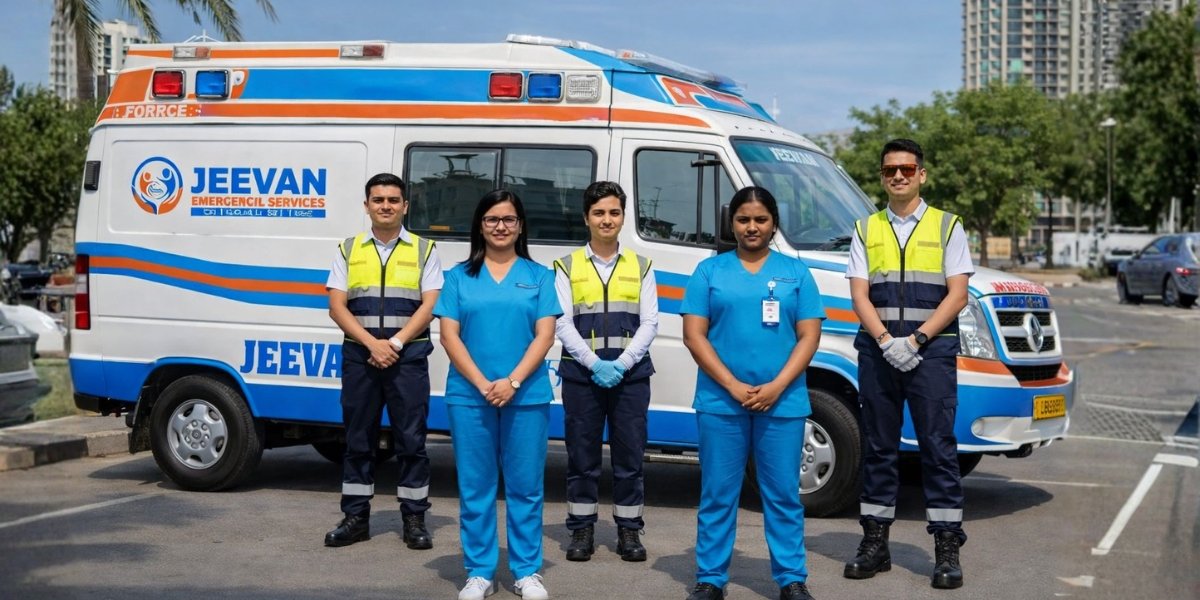
Partnering with established, experienced ambulance and emergency medical service providers ensures access to trained personnel, modern equipment, and proven protocols. Look for providers with a strong track record, transparent operations, and a commitment to ethical, patient-first care.
How Professional Ambulance Services Support Corporate Readiness
Expertise and Experience
Established ambulance providers bring decades of experience in handling diverse emergencies, from minor injuries to critical incidents. Their teams are trained to operate under pressure, ensuring calm, competent care.
Custom Solutions
Services can be tailored to the unique needs of each office whether it’s a single building, a multi-tower campus, or a remote industrial site. Options include permanent on-site ambulances, event-based coverage, or rapid response tie-ups.
Training and Consultation
Many providers offer training sessions, emergency planning consultations, and support in developing compliance-ready protocols.
Transparent Operations
Reputable ambulance services maintain clear documentation, regular reporting, and open communication with client organizations, supporting both compliance and continuous improvement.
Case Examples: When On-Site Medical Support Made a Difference
While we do not disclose specific client details, real-world experience shows that on-site ambulance and medical support have been instrumental in:
- Providing immediate care during sudden cardiac events, stabilizing patients before hospital transfer
- Managing injuries during office renovations or construction activities
- Supporting large-scale employee gatherings, ensuring rapid response to any incidents
- Assisting during public health emergencies, such as outbreaks or natural disasters
These scenarios highlight the value of preparedness and the peace of mind it brings to both employees and management.
Steps to Implement On-Site Ambulance & Medical Support in Your Office
- Assess Your Needs: Evaluate workforce size, office layout, and risk factors.
- Engage a Reputable Provider: Choose an ambulance service with proven experience, trained staff, and modern equipment.
- Develop Protocols: Establish clear procedures for medical emergencies, including roles, communication channels, and escalation steps.
- Train Your Team: Conduct regular training and awareness sessions for employees and security staff.
- Review and Improve: Schedule periodic audits and drills to keep systems effective and up-to-date.
Conclusion: Prioritizing Life, Building Trust
Corporate medical readiness is not just about compliance it is about valuing life, building trust, and creating a resilient workplace. Investing in on-site ambulance and medical support demonstrates a deep commitment to employee wellbeing and responsible business leadership.
As India’s workplaces evolve, so must our approach to safety. By partnering with experienced emergency medical service providers and fostering a culture of preparedness, organizations can ensure that help is always close at hand when it matters most.
For more information on implementing on-site ambulance services or to discuss a tailored solution for your office, reach out to our expert team today.