When a medical emergency strikes, most people know they need an ambulance but they rarely know which type. In India, not all ambulances are the same. Choosing the right one can make the difference between stabilizing a patient in time or worsening their condition. Ambulances are categorized based on the level of care they can provide: Basic Life Support (BLS), Advanced Life Support (ALS), and ICU/Critical Care Ambulances. Each one serves a different purpose, is equipped differently, and is staffed according to the severity of the situation.
Understanding the differences will help you make the right decision during an emergency. This guide explains what BLS, ALS, and ICU ambulances are, when they should be used, and how to quickly identify which one your situation requires.
Why Choosing the Right Ambulance Matters
In India, emergency medical response varies greatly depending on traffic conditions, distance to the hospital, and availability of trained staff. The period between the emergency and reaching professional medical care often called the Golden Hour is the most crucial. The right ambulance can provide early treatment, stabilize the patient, and prevent complications.
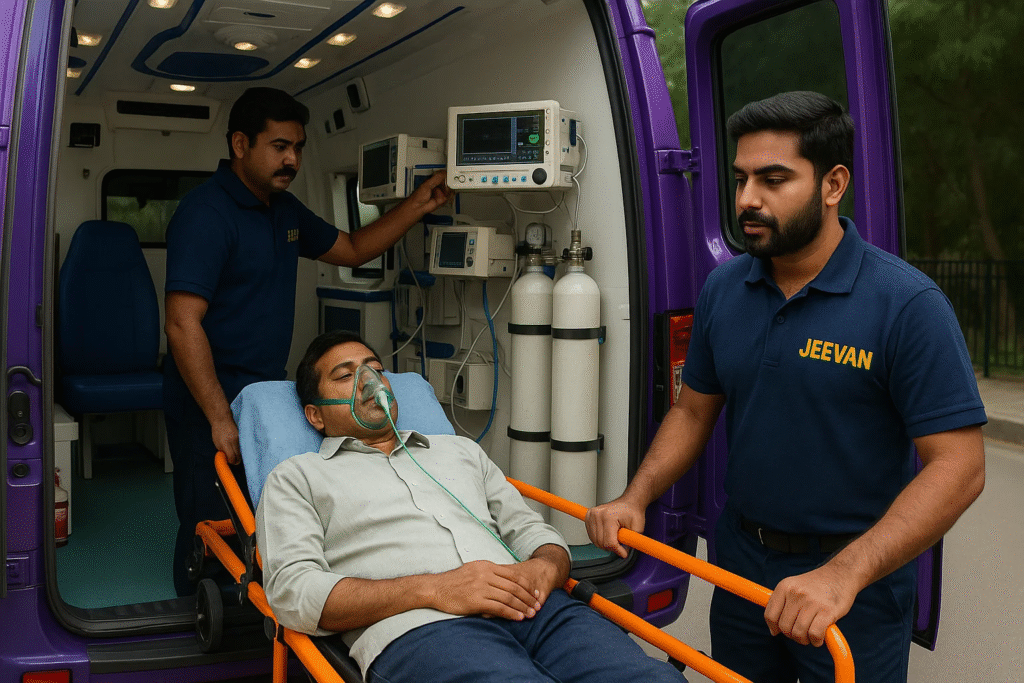
Ambulances today are mobile emergency rooms. They carry advanced equipment, oxygen support, medical devices, and trained paramedics who begin life-saving treatment before reaching a hospital. But every ambulance is not equipped the same way, which is why selecting the correct type is essential.
What Is a BLS Ambulance?
Basic Life Support (BLS) ambulances are designed for patients who are stable and do not require advanced medical support during transport. These are the most common type of ambulances used for non-critical cases.
A BLS ambulance generally includes:
- Basic first-aid equipment
- Oxygen support
- Stretcher and wheelchair access
- Automated External Defibrillator (AED) in some units
- Trained Emergency Medical Technicians (EMTs)
This ambulance is ideal for patients who need safe transportation but are not in a life-threatening condition.
When Should You Call a BLS Ambulance?
You should call a BLS ambulance when:
- The patient is stable and conscious
- There is no severe breathing difficulty
- The patient only requires observation or basic first aid
- Transporting a patient for follow-up visits or planned procedures
- The patient has minor injuries or fractures
- For elderly or bedridden patient transfers
Example:
A person with mild dehydration, controlled fever, a minor fracture, or someone needing transport from home to hospital or vice versa can be safely taken in a BLS ambulance.
What Is an ALS Ambulance?
Advanced Life Support (ALS) ambulances are designed for patients experiencing serious medical emergencies. These ambulances are equipped with advanced monitoring and life-saving equipment. They have trained paramedics, nurses, and sometimes even emergency doctors.
Typical equipment inside an ALS ambulance includes:
- Cardiac monitor
- Defibrillator
- Ventilator support
- Advanced airway equipment
- Suction machine
- IV lines and emergency medications
- Oxygen system with multiple outlets
ALS ambulances operate like mini-emergency care units capable of handling complex and critical conditions.
When Should You Call an ALS Ambulance?
You should call an ALS ambulance when the patient’s condition is serious, unpredictable, or rapidly worsening. This includes:
- Chest pain or suspected heart attack
- Stroke symptoms (slurred speech, paralysis)
- Severe breathing difficulty
- Seizures or unconsciousness
- Major trauma or accidents
- High-risk pregnancies
- Severe bleeding or shock
- Severe allergic reactions (anaphylaxis)
Example:
If someone suddenly collapses, struggles to breathe, loses consciousness, or complains of severe chest pain, an ALS ambulance is the correct and safest choice.

What Is an ICU or Critical Care Ambulance?
An ICU Ambulance (also known as a Critical Care Ambulance) is the highest level of emergency transport available on the road. It carries equipment similar to a hospital ICU and is staffed by highly trained professionals.
Inside an ICU ambulance, you will typically find:
- Advanced ventilators
- Multi-parameter cardiac monitors
- Infusion pumps
- Defibrillator
- Advanced airway and respiratory support
- Emergency and critical care medication
- A dedicated doctor or critical care nurse
These units are used when a patient requires continuous, intensive monitoring and treatment during the journey.
When Should You Call an ICU Ambulance?
You should choose an ICU ambulance when:
- The patient is critically ill or unstable
- They require continuous ventilator support
- They are being shifted from one ICU to another
- They are recovering from major surgery, organ transplant, or intensive care therapy
- They have severe respiratory failure or organ failure
- They require strict medical supervision during long-distance or inter-city transfers
Example:
A patient on a ventilator or someone who has just undergone a major cardiac surgery should always be transported in an ICU ambulance.
How to Choose Between BLS, ALS, and ICU Ambulance The Quick Rule
A simple way to decide:
- If the patient is stable → BLS
- If the patient is serious or uncertain → ALS
- If the patient is critical or ICU-level → ICU ambulance
When in doubt, always choose ALS because it can manage most emergencies and provide immediate medical intervention until the patient reaches the hospital.
- Visit: National Health Portal of India for more info.
Why You Should Avoid Using a Personal Vehicle in Serious Cases
Many people in India still attempt to rush emergency patients to the hospital in a car, auto, or two-wheeler. This is extremely risky because:
- No medical support is available during transit
- The patient’s condition may deteriorate suddenly
- No oxygen or resuscitation equipment is present
- Personal vehicles cannot navigate traffic with priority access
Emergency medical care must begin immediately. Ambulances are designed to deliver treatment during transport, often making the crucial difference between survival and fatal delay.
Choose the Right Ambulance, Save a Life
Understanding the difference between BLS, ALS, and ICU ambulances helps families act faster and more confidently during emergencies. Every second counts, especially during heart attacks, strokes, severe accidents, or respiratory distress. By choosing the correct ambulance type, you ensure that the patient receives immediate medical attention, the right equipment, and expert care even before reaching the hospital.
Ambulance services today are equipped to manage nearly every type of situation, but selecting the right unit is critical. Whether the emergency is mild, serious, or critical, the right ambulance can stabilize the patient, prevent complications, and significantly improve outcomes during those life-saving minutes.