When a medical emergency happens, every second can feel overwhelming. A family member may be frightened, unsure what to do, or struggling to explain the patient’s condition. Meanwhile, paramedics and emergency medical technicians are working to assess the situation, provide immediate care, and prepare the patient for transportation.
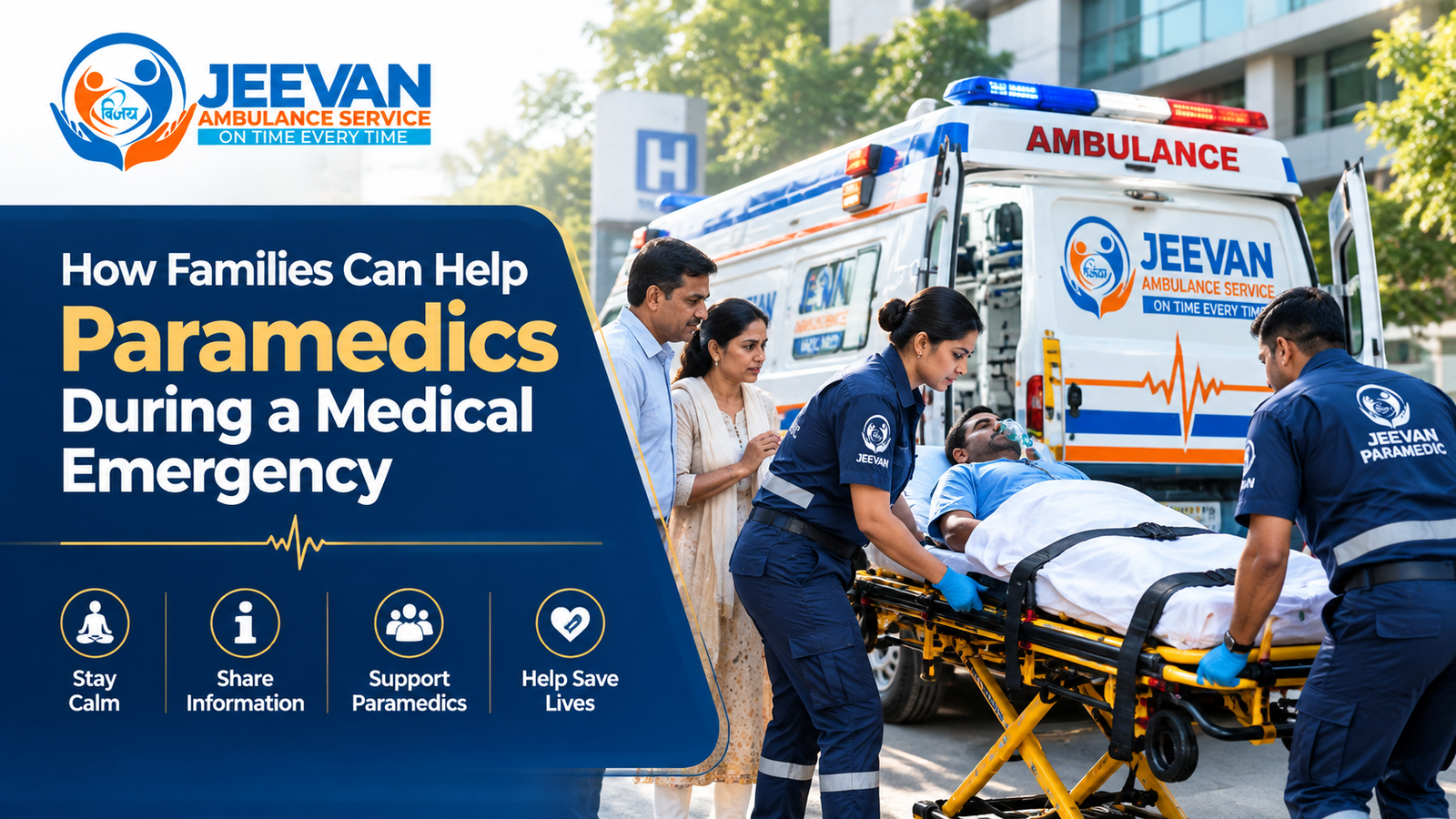
Families play an important role in this process. By staying calm, sharing accurate information, preparing the patient’s surroundings, and following medical instructions, they can help emergency teams work more efficiently.
Whether the emergency occurs at home, in a residential society, at an office, or in a public place, simple actions can make a meaningful difference. This guide explains how families can support paramedics before and during an ambulance transfer while keeping patient safety at the centre of every decision.
Important: In a life-threatening emergency, contact your local emergency medical service immediately. Do not delay professional assistance while reading this guide or gathering information.
Why Does Family Support Matter During a Medical Emergency?
Family support helps emergency medical teams understand the patient’s condition, access the patient safely, and coordinate care. Relatives often know the patient’s medical history, medicines, allergies, and recent symptoms. This information can complement the paramedic’s assessment and help guide appropriate care.
Paramedics are trained to evaluate and manage medical emergencies. However, they may not know the patient’s complete history when they arrive. A family member who can provide accurate details may help the team make informed decisions more efficiently.
Family cooperation also helps reduce confusion. Clear communication, an accessible pickup location, and a prepared set of essential documents can support a smoother transfer.
What Is the Family’s Role?
The family’s role is to support the emergency team, not replace it. Relatives can provide information, follow instructions, reassure the patient, and help with practical arrangements.
They should avoid performing unfamiliar medical procedures or moving a seriously injured patient without professional guidance.
What Should Families Do Before the Ambulance Arrives?
Before an ambulance arrives, families should contact emergency medical services, follow the instructions provided by the dispatcher, and prepare the patient and location for the responding team. They should also gather relevant medical information and ensure that someone is available to guide the ambulance to the correct entrance.
1. Call for Professional Medical Assistance
If the patient has a serious or potentially life-threatening condition, seek emergency medical help immediately.
When calling, explain the patient’s symptoms, exact location, and any immediate dangers. Mention whether the patient is conscious, breathing normally, or experiencing severe symptoms such as chest pain, difficulty breathing, or sudden weakness.
The dispatcher may provide instructions while the ambulance is on its way. Follow those instructions carefully.
2. Stay With the Patient
If it is safe to do so, remain with the patient until professional help arrives. Observe changes in the patient’s condition and communicate them to the emergency team.
If the patient becomes unresponsive or is not breathing normally, follow the emergency dispatcher’s instructions regarding CPR and other immediate measures.
3. Keep the Patient Comfortable
Help the patient remain in a safe and comfortable position, provided there is no suspected spinal injury or other reason to avoid movement.
Do not force the patient to stand, walk, or change position if doing so may worsen the condition.
For example, a person experiencing severe breathing difficulty may need to remain in a position that helps them breathe comfortably while awaiting professional assistance.
4. Prepare the Entrance
Make sure the ambulance team can reach the patient without unnecessary obstacles. Unlock gates, arrange building access, and inform security personnel if necessary.
In apartment buildings, someone should be ready to guide the paramedics from the entrance to the patient’s location.
How Can Families Prepare the Patient’s Location?
A safe and accessible environment allows paramedics to assess the patient and begin care without unnecessary obstacles. Families can help by clearing pathways, improving lighting, controlling crowds, and keeping pets away from the working area.
Clear the Pathway
Remove furniture, loose objects, and other obstacles that may make it difficult to move a stretcher.
If the patient is in a bedroom, living room, office, or narrow corridor, create as much safe working space as possible without moving the patient unnecessarily.
Arrange Building Access
In residential societies and high-rise buildings, inform the security desk or building management that an ambulance is arriving.
If an elevator is needed, arrange access where possible. Share the correct building entrance, floor number, wing, and flat or office number.
Keep the Area Calm
Too many people around the patient can make communication difficult. Ask unnecessary bystanders to move away and allow the medical team to work.
One family member should ideally act as the primary communicator.
Secure Pets
Dogs and other pets should be kept safely away from the patient and paramedics. Even friendly animals may become anxious during an emergency.
What Medical Information Should Families Share With Paramedics?
Families should share accurate and relevant information about the patient’s symptoms, medical history, medicines, allergies, and recent events. This information can help paramedics understand the situation and make appropriate care decisions.
Essential Information to Communicate
- Patient’s name and approximate age.
- Main symptoms and when they began.
- Whether the symptoms are getting worse.
- Existing medical conditions.
- Current medicines and known allergies.
- Recent surgery, injury, or hospital admission.
- Relevant medical devices, such as a pacemaker.
- Any treatment already provided before the ambulance arrived.
Use Clear, Simple Language
Instead of saying, “He is not feeling well,” describe the specific symptoms.
For example:
“My father is 68 years old. He developed severe chest discomfort about 20 minutes ago and is sweating. He has a history of heart disease.”
Specific information is more useful than assumptions or vague descriptions.
Share Changes in Condition
If the patient’s symptoms change while waiting, inform the dispatcher or paramedics immediately.
Mention changes such as worsening breathing difficulty, loss of consciousness, new confusion, seizures, or increasing pain.
Do not assume that the team already knows about a change simply because it happened in front of them.
How Can Families Help Paramedics Assess the Patient?
Families can support assessment by answering questions honestly, providing a timeline of events, and avoiding unnecessary interruptions. The patient’s symptoms and medical history should be described accurately, even when the information may seem incomplete.
Provide a Timeline
Try to explain:
- When the patient was last feeling normal.
- When the first symptom appeared.
- What happened immediately before the emergency.
- Whether any medication or first aid was provided.
- How the patient’s condition changed over time.
A clear timeline can be especially helpful in emergencies involving stroke symptoms, chest pain, fainting, or sudden breathing difficulties.
Do Not Guess Medical Details
If you do not know the name of a medicine or the exact time symptoms started, say so. It is better to provide honest uncertainty than incorrect information.
You can show the medicine packaging, prescription, or medical records if available.
Allow the Team to Work
Paramedics may need to perform assessments, monitor vital signs, administer treatment, or prepare the patient for transport.
Give them sufficient space and answer questions when asked.
What Should Families Avoid During a Medical Emergency?
Families should avoid delaying emergency assistance, giving unapproved medicines, crowding the patient, or attempting risky movements. Well-intentioned actions can sometimes worsen a patient’s condition or interfere with professional care.
Do Not Delay Calling an Ambulance
Do not wait for symptoms to become severe before seeking help if the situation may be an emergency.
Examples of concerning symptoms include:
- Severe difficulty breathing.
- Sudden weakness or facial drooping.
- Loss of consciousness.
- Serious chest pain.
- Major bleeding.
- Severe injury following an accident.
- Sudden confusion or inability to speak normally.
Do Not Give Food, Water, or Medicines Without Guidance
A patient may have difficulty swallowing, reduced consciousness, or a condition where oral intake is unsafe.
Do not give food, water, or medicines unless a qualified medical professional advises you to do so.
Do Not Move an Injured Patient Unnecessarily
After a serious accident, avoid moving the patient unless there is immediate danger or emergency professionals instruct you to do so.
Unnecessary movement may worsen certain injuries, including suspected spinal injuries.
Do Not Crowd the Ambulance
Allow paramedics to access the patient, equipment, and stretcher. Too many people can create safety risks and make communication difficult.
How Can Families Assist During Patient Transfer?
Families can assist during patient transfer by following the medical team’s instructions, providing accurate destination details, and helping coordinate essential documents. The ambulance crew remains responsible for determining how the patient should be moved and transported.
Follow the Paramedic’s Instructions
The team may ask family members to assist with simple tasks, such as holding a door open, moving personal belongings, or guiding them through a building.
Follow instructions carefully and do not attempt to lift or reposition the patient without guidance.
Share the Correct Destination
Confirm the receiving hospital, department, entrance, and relevant contact person if known.
For hospital-to-hospital transfers, ensure that the receiving facility has been informed and that the transfer arrangements are understood.
Respect Medical Equipment
Ambulances may contain monitors, oxygen systems, ventilators, suction equipment, and other medical devices.
Do not adjust, disconnect, or operate equipment unless instructed by the medical team.
Keep the Patient’s Belongings Together
Prepare essential belongings such as identification, medical records, medicines, spectacles, and a phone charger where practical.
Avoid carrying unnecessary valuables.
What Documents and Medicines Should Families Prepare?
Families should prepare relevant medical records, prescription details, identification documents, and current medication information when time permits. These materials can help the receiving healthcare team understand the patient’s history and continue appropriate care.
Useful Documents
- Government-issued identification, where required.
- Existing prescriptions.
- Recent medical reports.
- Discharge summaries.
- Allergy information.
- Insurance or hospital documentation, if relevant.
- Referral or transfer documents, where applicable.
Medication Information
If possible, bring the patient’s current medicines in their original packaging.
Do not delay emergency transportation to collect every document. Medical assistance takes priority.
For Planned Patient Transfers
For scheduled transfers, families have more time to confirm the receiving hospital, prepare records, arrange accessibility, and discuss the patient’s transportation needs with the ambulance provider.
How Should Families Communicate With the Receiving Hospital?
Families should communicate the patient’s condition, estimated arrival, and transfer requirements to the receiving hospital when appropriate. This helps support continuity of care and allows the hospital to prepare for the patient’s arrival.
Confirm the Hospital Details
Ensure that the ambulance team has the correct hospital name, address, department, and contact information.
Large hospitals may have multiple entrances or departments, so precise information is useful.
Share Relevant Medical Information
If the patient is being transferred between hospitals, provide the receiving team with available medical reports, prescriptions, and referral documents.
The ambulance medical team may also communicate clinical information as part of the transfer process.
Keep Communication Organized
One family member should ideally handle communication with the hospital and ambulance provider. This reduces conflicting instructions and unnecessary confusion.
What Should Families Know About Ambulance Equipment?
Ambulance equipment varies according to the ambulance category and the patient’s medical requirements. Families should understand that equipment is operated by trained personnel and should not be adjusted without professional instruction.
Common Equipment
Depending on the ambulance type, equipment may include:
- Patient stretcher and safe transport systems.
- Oxygen delivery equipment.
- Vital-sign monitoring devices.
- Suction equipment.
- Emergency medical supplies.
- Cardiac monitoring and resuscitation equipment.
- Ventilator systems in appropriately equipped ambulances.
Why Equipment Awareness Matters
During an emergency, relatives may notice alarms, cables, oxygen tubing, or monitoring devices connected to the patient.
The best approach is to avoid touching the equipment and allow the medical team to manage it.
If a tube becomes disconnected or an alarm sounds, inform the paramedic immediately.
How Can Families Stay Calm and Support the Patient?
Remaining calm helps families communicate more clearly and provide reassurance. Patients may feel frightened, confused, or distressed during an emergency. A familiar voice and supportive presence can help them feel less alone.
Speak Clearly and Reassuringly
Use short, calm sentences. Avoid making alarming statements or discussing worst-case outcomes in front of the patient.
You might say:
“The medical team is here. They are assessing you and helping you get the care you need.”
Avoid Arguments
Emergency situations can create stress among family members. Try to avoid disagreements about treatment, transportation, or blame while the medical team is working.
Focus on the immediate needs of the patient.
Respect the Patient’s Dignity
Maintain privacy and avoid unnecessary photographs, videos, or public discussions of the patient’s condition.
Patients deserve dignity and respectful treatment throughout emergency transportation.
Common Mistakes Families Make During Emergencies
Many families make avoidable mistakes because they are frightened or unfamiliar with emergency procedures. Recognizing these mistakes can help relatives respond more effectively.
Mistake 1: Waiting Too Long to Seek Help
Some families wait to see whether symptoms improve. This may delay assessment and treatment.
Better approach: Seek professional advice promptly when serious symptoms appear.
Mistake 2: Providing Incomplete Information
Families may forget to mention important medical conditions or medicines.
Better approach: Share the patient’s medical history and current treatment as accurately as possible.
Mistake 3: Crowding the Patient
Several relatives may try to help at once, making the environment crowded.
Better approach: Designate one person to communicate with the paramedics.
Mistake 4: Moving the Patient Without Guidance
Relatives may attempt to lift or transport a patient themselves.
Better approach: Follow the medical team’s instructions and avoid unnecessary movement.
Mistake 5: Delaying Transport to Collect Belongings
Families may spend too much time collecting documents and personal items.
Better approach: Prioritize emergency care. Gather essentials only when it is safe and practical.
Myth vs Fact: Helping Paramedics
| Myth | Fact |
|---|---|
| Family members should perform advanced medical procedures. | Families should follow dispatcher and paramedic instructions and avoid unfamiliar procedures. |
| More people around the patient means more help. | A calm, organized environment allows the medical team to work more effectively. |
| A patient should always be moved before the ambulance arrives. | Unnecessary movement can be dangerous, especially after serious injuries. |
| Families must collect every medical document before transport. | Emergency assistance takes priority. Essential records can be gathered when practical. |
| The ambulance crew does not need the patient’s medical history. | Accurate medical history can help inform assessment and care. |
Frequently Asked Questions
1. What should I do when an ambulance is on its way?
Stay with the patient if safe, follow dispatcher instructions, prepare access to the location, and gather relevant medical information. Keep the area clear for the responding medical team.
2. Should family members help lift the patient onto the stretcher?
Only if the paramedics specifically instruct them to assist. Patient movement should be managed by trained personnel whenever possible.
3. What information should I tell the paramedics?
Share the patient’s symptoms, when they started, medical history, current medicines, allergies, and any treatment already provided.
4. Can I give food or water to a patient waiting for an ambulance?
Do not give food or water without appropriate medical guidance, particularly if the patient has reduced consciousness, difficulty swallowing, or may require urgent procedures.
5. How can I help paramedics find my home in a residential society?
Provide the society name, gate number, building, wing, floor, flat number, and a nearby landmark. Arrange for someone to guide the team from the entrance.
6. Should I bring the patient’s medical records?
Yes, when practical. Prescriptions, medical reports, discharge summaries, and medicine packaging can help the receiving healthcare team. Do not delay emergency assistance to collect them.
7. Can family members travel in the ambulance?
This depends on the ambulance provider’s policies, available space, patient needs, and safety considerations. Ask the medical team for guidance.
8. What if the patient’s condition worsens while waiting?
Immediately inform the emergency dispatcher or responding medical team. Follow the instructions provided and report changes such as loss of consciousness or abnormal breathing.
9. How can families help during hospital-to-hospital transfers?
Confirm the destination, prepare transfer documents, share medical information, and follow the ambulance team’s instructions during loading and transportation.
10. Can Jeevan Ambulance help with planned patient transfers?
Jeevan Ambulance provides patient transportation services for suitable planned transfers, including hospital-to-hospital and home-to-hospital transportation, subject to availability and the patient’s medical requirements.
Key Takeaways
- Seek emergency medical assistance promptly when serious symptoms occur.
- Stay with the patient and follow professional instructions.
- Share accurate medical history, symptoms, and medication details.
- Keep pathways and ambulance access clear.
- Avoid giving food, water, or medicines without guidance.
- Do not move seriously injured patients unnecessarily.
- Allow paramedics to manage medical equipment and patient care.
- Prepare essential documents when practical.
- Keep communication calm and organized.
- Respect the patient’s privacy and dignity.
Conclusion
Families are an important part of the emergency response process. Their knowledge of the patient’s medical history, cooperation with paramedics, and ability to organize practical details can help support safe and coordinated care.
The most valuable contribution a family can make is to remain calm, communicate accurately, and allow trained medical professionals to assess and treat the patient.
At Jeevan Ambulance Service, we understand that emergencies can be stressful for patients and their loved ones. Our ambulance services support emergency medical transportation, critical care transfers, and planned patient transfers, with the aim of providing professional assistance throughout the journey.
When a medical emergency occurs, timely assistance and clear communication matter. Prepare your family today so you know what to do when help is needed.