Emergencies don’t wait for anyone. One moment everything feels normal, and the next, someone’s gasping for breath, bleeding heavily, or lying unconscious.
In those terrifying minutes before the ambulance arrives, what you do (or don’t do) can literally decide between life and death.
The truth is, you don’t need a medical degree to save a life. With a calm mind and a few basic first-aid steps, you can make a huge difference.
Here are five lifesaving steps to follow before the ambulance arrives practical, easy, and something every person should know.
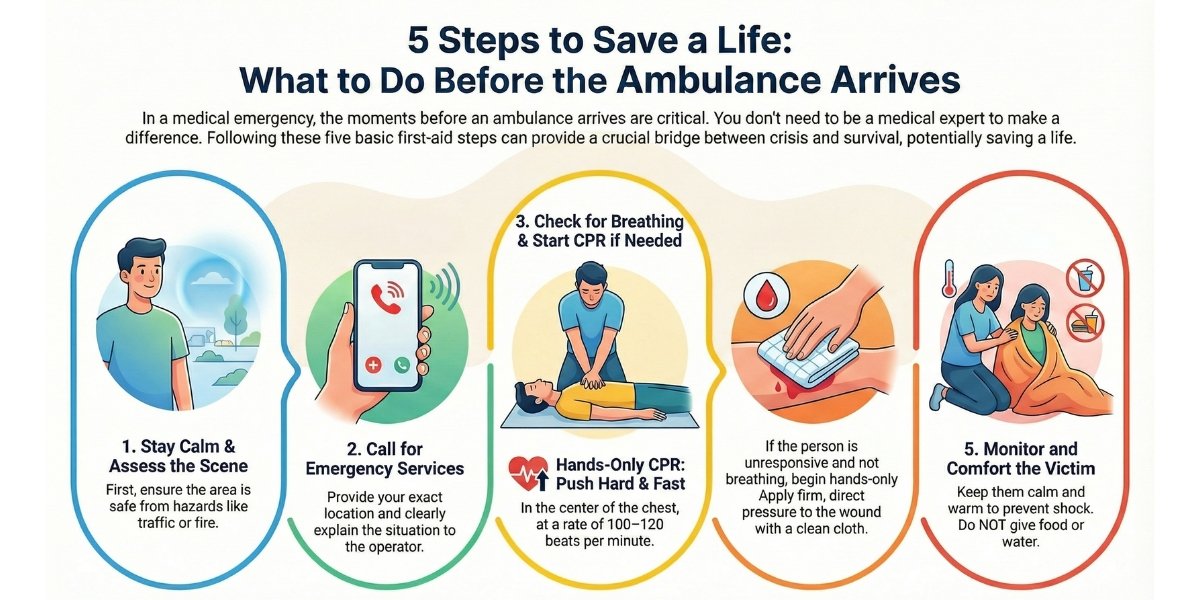
1. Stay Calm and Assess the Situation
The first and most important step is to stay calm. Panicking helps no one. When your mind races, you make mistakes and emergencies need focus, not fear.
Take a quick look around. Is the area safe? Check for hazards like traffic, fire, electricity, or falling objects. You can’t help anyone if you get injured too.
Once it’s safe, approach the person carefully. If they’re conscious, talk to them:
“Hey, I’m here to help. The ambulance is on its way.”
Your voice and calm presence can reduce their panic. Then, assess what’s going on:
- Is the person conscious or unconscious?
- Are they breathing normally?
- Is there bleeding or visible injury?
This quick evaluation will help you decide your next move and provide crucial details when you call for help.
2. Call Emergency Services Immediately
After assessing the situation, call for help right away. In India, dial 108 or 112 for emergencies. In the U.S., it’s 911.
When you connect with emergency services:
- Stay calm and speak clearly.
- Give your exact location, including nearby landmarks.
- Explain what happened (accident, fall, unconscious person, etc.).
- Mention how many people are hurt and what their condition looks like.
- Share your phone number in case they need updates.
If someone else is nearby, ask them to make the call so you can focus on the victim.
💡 Pro tip: Emergency operators can guide you over the phone whether it’s how to perform CPR, control bleeding, or handle burns. Don’t hesitate to follow their instructions closely.
3. Check for Responsiveness and Breathing
This is where first aid can save a life.
Gently tap the person’s shoulder and shout, “Are you okay?”
If they don’t respond, check for breathing:
- Tilt their head slightly back and lift their chin to open the airway.
- Look for chest movement, listen for breathing, and feel for air on your cheek for about 10 seconds.
- If the person is breathing, place them in the recovery position on their side, with the head slightly tilted back. This keeps the airway clear.
- If the person is not breathing, start CPR immediately.
How to Perform CPR (Hands-Only Method):
- Place the heel of one hand on the center of the chest.
- Place your other hand on top and interlock your fingers.
- Push hard and fast about 2 inches deep, at a rhythm of 100–120 compressions per minute (think of the beat of Stayin’ Alive by the Bee Gees).
- Allow the chest to rise completely between compressions.
Continue CPR until the ambulance arrives or the person starts breathing again.
Even if you’re not formally trained, hands-only CPR can keep oxygen flowing to the brain — and that can mean the difference between life and death.
4. Control Severe Bleeding and Handle Injuries
If there’s heavy bleeding, act immediately. Severe blood loss can cause shock within minutes.
Here’s what to do:
- Apply direct pressure to the wound using a clean cloth, towel, or even your shirt.
- If an object (like glass or metal) is stuck, don’t remove it — press gently around it instead.
- Raise the injured limb above the heart level to slow bleeding.
If you suspect a fracture, don’t move the person unnecessarily. Try to immobilize the injured area with a splint — you can use a stick, magazine, or rolled-up newspaper tied loosely.
For burns, run cool (not cold) water over the affected area for 10–15 minutes.
Avoid applying ice, butter, toothpaste, or any home remedies — they cause more harm than good.
Remember, your goal isn’t to fix the injury it’s to keep the person stable until professional help arrives.
5. Keep Monitoring and Comfort the Victim
Once you’ve called for help, checked breathing, and controlled bleeding, your next job is to monitor and comfort the person.
Keep an eye on their breathing and pulse. If either stops, resume CPR.
If the person is conscious, talk to them — calm voices reduce panic and help keep shock at bay.
Say things like:
“You’re doing great.”
“Help is coming soon.”
“Just breathe slowly — you’re safe.”
Avoid giving them food, drink, or medication. Cover them with a light jacket or cloth if they’re cold — it helps prevent shock.
When the ambulance arrives, quickly explain what you did — how the person was found, any CPR performed, and any changes in their condition. These details can save valuable treatment time.
Why These Steps Matter
Emergencies don’t just test a person’s health they test our humanity.
Those few minutes before the ambulance arrives can feel like forever, but your actions in that time are priceless.
By staying calm, calling for help, and providing basic first aid, you become the bridge between crisis and survival.
You don’t need to be a doctor — just someone willing to help.
Because in that moment, your courage, clarity, and compassion can save a life.
Final Thoughts
We never expect emergencies — but being prepared means being powerful.
Learn CPR, save emergency numbers on your phone, and share this article with your friends and family.
Because the next time something unexpected happens, your quick actions could make you the reason someone gets a second chance at life.
FAQs
1. What is the first thing I should do in a medical emergency?
The first step is to stay calm and ensure safety. Check your surroundings for danger, then assess the person’s condition. Once it’s safe, call emergency services immediately and follow their instructions.
2. How can I help someone who isn’t breathing before the ambulance arrives?
If the person isn’t breathing, start CPR immediately. Push hard and fast in the center of the chest — about 100–120 compressions per minute. Continue until the person starts breathing or help arrives.
3. What should I do if someone is bleeding heavily?
Apply firm pressure on the wound using a clean cloth or towel to stop bleeding. Don’t remove any objects stuck in the wound — press around them and keep the injured area elevated if possible.
4. Can I give food or water to the victim before the ambulance arrives?
No, avoid giving food, drink, or medication, especially if the person is unconscious or semi-conscious. It can cause choking or complications. Instead, focus on keeping them calm, warm, and still.